
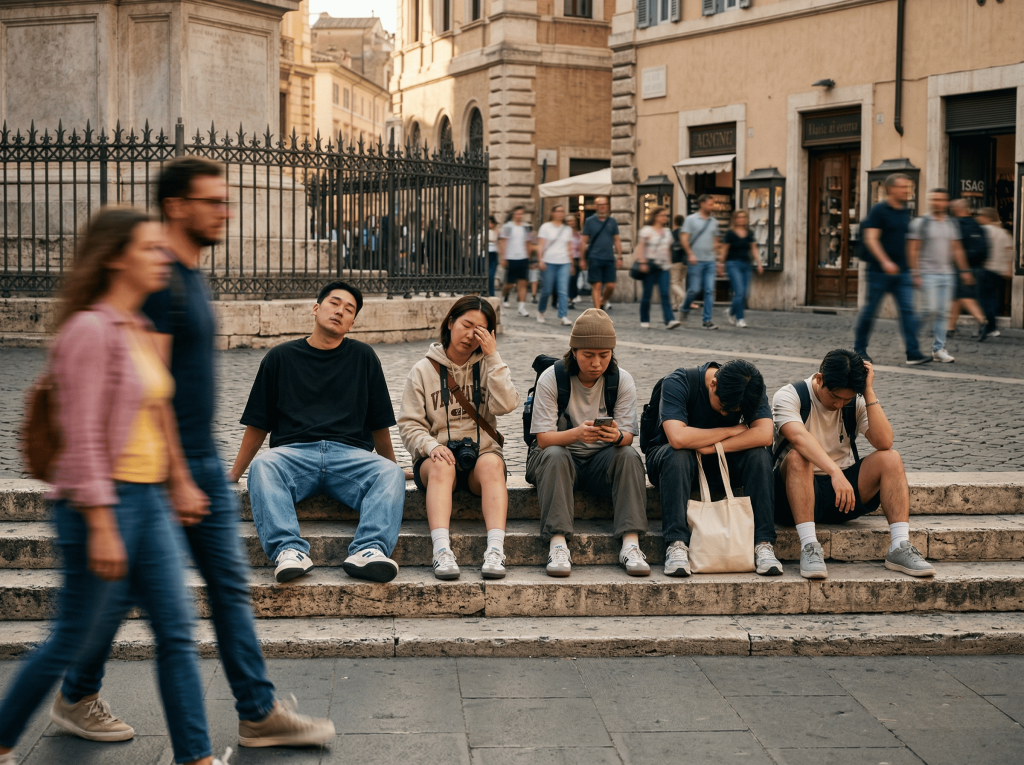
There’s a version of travel we all seem to recognize.
Wake up early. Rush breakfast. First stop at 8:00 AM. Second at 9:30. Third by noon. Lunch squeezed somewhere in between. A few photos. A quick video. Then move again.
By the end of the day, we’ve “seen” everything.
And yet… somehow, it feels like we didn’t really experience any of it.
The Itinerary That Looks Perfect on Paper
We’ve all built (or followed) that kind of itinerary.
It’s efficient, optimized, and fits everything neatly into a few days.
On paper, it looks like a beautiful:
- All the must-see spots
- No time wasted
- Maximum value
But in reality, something feels off.
Instead of feeling fulfilled, we feel… tired.
Instead of feeling immersed, we feel rushed.
Instead of remembering moments, we remember schedules.
When Travel Becomes a Checklist
Somewhere along the way, travel quietly shifted.
It became less about being somewhere, and more about covering somewhere.
We start measuring a trip by:
- How many places we visited
- How many photos we captured
- How much we managed to fit in
And without realizing it, we begin to treat cities like tasks.
Landmark → Done
Café → Done
Viewpoint → Done
Then move on.
It works. Technically.
But it strips away the very thing we travel for in the first place, the feeling of being there.
Why It Keeps Happening
It’s not random. There are reasons we fall into this pattern.
A bit of FOMO. A bit of “we might not come back here again.” A bit of influence from perfectly curated travel content.
And a big one, we’re used to optimizing everything in life.
So when it comes to travel, we do the same, shortest routes, tightest schedules, most efficient sequences.
It feels smart. But travel isn’t a problem to solve.
The Hidden Cost of Overplanning
The more we try to control every moment, the less room we leave for the unexpected.
No time to sit longer at a place we actually enjoy. No space to wander into something unplanned. No flexibility when energy drops halfway through the day.
Everything becomes fixed.
And ironically, that “perfect” plan starts working against us. Because the best parts of travel rarely come from the plan itself.
They come from, staying a little longer than intended, turning into a random street, or following a recommendation we didn’t research
The moments we didn’t schedule.
A Different Way to Think About It
What if the goal isn’t to do more, but to experience more?
What if instead of asking, “How much can we fit into this trip?”
We start asking, “What do we actually want to feel from this trip?”
A city doesn’t need to be completed. It needs to be experienced, at a pace that lets it breathe.
That might mean fewer stops in a day, more time in each place, and leaving intentional gaps in the schedule
Not empty time, but Open time.
Time that allows the trip to unfold, instead of being executed.
Fixing the Itinerary (Without Overcomplicating It)
We don’t need to throw everything away, but a few small shifts can change the entire experience.
Instead of planning every hour, plan anchors (2–3 key things per day), instead of chasing distance, group experiences by feeling or area, instead of filling gaps, try to protect them.
And most importantly, give ourselves permission to not see everything, because the goal was never to see everything. It was to feel something real.
Maybe It’s Not About Traveling More Efficiently
Maybe it’s about traveling more intentionally. Because when the pace changes, everything else does too, including the way we notice things, the way we interact with a place, and the way a trip stays with us after it ends
And suddenly, travel feels less like a checklist…
and more like what we were looking for all along.
Want a Second Pair of Eyes on Your Trip?
We’ve been thinking a lot about this, and we’re starting something small. If you already have a trip in mind (or even a rough itinerary), feel free to share it with us.
Each week, we’ll pick 1–2 itineraries and help to redesign them, just to explore how they could feel different.
No pressure, no catch. Just a fresh perspective.
Drop it in the comments with #tripredesign or reach out directly, we’d love to take a look.